
NABH E-Mitra
NABH E-Mitra is a supportive initiative aimed at guiding healthcare organisations—especially entry-level and first-time applicants—through the NABH accreditation or certification process. The programme is particularly beneficial for newly established hospitals, clinics, and healthcare centres seeking structured direction in meeting quality and patient safety standards.
E-Mitra offers curated resources, step-by-step guidance, and reference material to help facilities implement core requirements, understand documentation needs, and prepare for assessments. Whether you’re setting up a new facility or aiming to strengthen compliance early on, NABH E-Mitra serves as your go-to companion for a smoother, informed, and confident journey towards quality excellence.

Implementing NABH Entry Level Standards
Provide tools and guidance to help healthcare organisations meet NABH Entry Level Standards, ensuring foundational quality compliance.

Identifying and Addressing Practice Gaps
Help organisations identify gaps in their practices and offer strategies to improve patient care and safety.

Closing Practice Gaps in Healthcare Organisations
Assist in assessing and closing gaps in healthcare processes to enhance quality and regulatory compliance.

Free Resources for Healthcare Organisations
Offer free checklists, policies, forms, and reference materials to support accreditation and quality improvements.
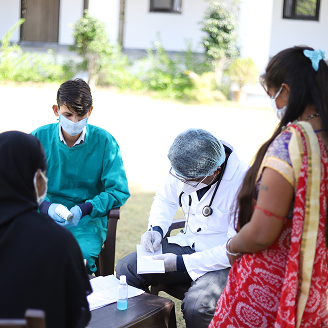
Supporting Quality Improvement in Smaller Organisations
Provide guidance and resources to help smaller healthcare organisations improve quality and efficiency with limited resources.

Easy Implementation
The initiative provides clear and practical guidance for hospitals to implement NABH standards, making it easier to follow a step-by-step approach. It ensures that healthcare organisations can quickly understand and apply the standards for immediate improvements.

Save Time
By offering ready-to-use customisable templates, signages, and forms, it saves time on creating these from scratch. This allows healthcare teams to focus on delivering quality care rather than spending resources on administrative tasks.

Support Continuous Improvement
It serves as a foundation for continuous quality improvement within your healthcare facility. By providing ongoing support and tools, it encourages a culture of regular assessment, learning, and growth.

Boosts Staff Awareness
Training materials and signages help increase staff awareness of quality and safety practices, improving overall care. Staff become more engaged and proactive in maintaining high standards of care and patient safety.

Provide Practical Tools
From checklists to sample policies, it gives you everything you need to begin the process. These tools simplify the implementation of quality standards, ensuring consistency and adherence across departments.
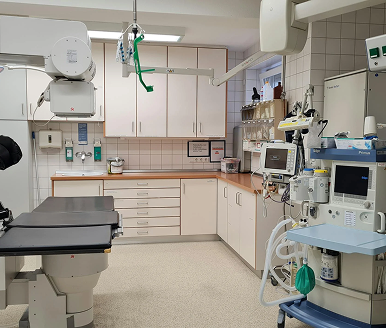
Ensure Compliance
Helps you identify gaps and align your hospital’s practices with NABH standards, ensuring compliance and improving patient outcomes. This also mitigates the risk of non-compliance and enhances the overall quality of care provided.

Free of Cost
Globally incubate standards compliant channels before scalable benefits. Quickly disseminate superior deliverables without financial strain, enabling access to quality resources for healthcare organisations of all sizes at no cost.
Human Resource Department
This checklist assesses the effectiveness of employee training, compliance with disciplinary and grievance policies and management of health and personal information, ensuring a supportive and safe work environment in the healthcare organization.
Management / Administration
This checklist verifies the establishment of a clear organizational structure, compliance with regulatory requirements, ethical leadership and transparency in ownership and billing practices within the healthcare organization.
Front office: Registration, Admission and Billing counters
This checklist ensures effective patient admission processes by verifying staff awareness of hospital policies, standard operating procedures and patient rights, while monitoring quality indicators related to admission times and pricing transparency.
Housekeeping, Laundry, Kitchen
This checklist ensures compliance with biomedical waste management protocols, maintain hygiene in laundry practices and uphold food safety standards, focusing on safe handling, segregation, transportation and disposal of waste, as well as proper handling and employee health monitoring in the kitchen.
Medical Gases, Vacuum System etc.
This checklist ensures the continuous availability and safety of potable water, electricity and medical gas and vacuum systems within the facility. It verifies compliance with maintenance protocols, staff training and safety measures to support patient care and operational efficiency.
Common Areas (Policies/Trainings/ Signages etc)
This checklist ensures that essential training sessions and critical signages are implemented for safety and compliance.
Biomedical Equipment Management
This checklist ensures documented equipment plans, regular maintenance, operational compliance and comprehensive inventory management. It covers training for technicians, repair documentation and records for equipment uptime and downtime.
Medical Record Department (MRD)
This checklist ensures unique identifiers, authorized entries, timely documentation and confidentiality. It covers essential patient information and retention policies, safeguarding data integrity through regular audits.
Safety & Quality
This checklist ensures designated individuals for quality assurance, documented and updated quality programs, regular internal audits, management support for quality improvement, established committees, monitored key performance indicators and oversight of safety programs.
CSSD
This checklist ensures proper sterilization space, unidirectional flow, documented cleaning and sterilization policies, adherence to shelf life, regular validation testing, a sterilization recall procedure, and a reuse policy for medical devices.
Hospital Infection Control
This checklist ensures proper infection control practices, including updated protocols, cleanliness, availability of PPE, hand hygiene compliance, and monitoring of hospital-associated infections. It also verifies vaccination protocols for staff and safe management of hazardous spills.
Medication Management: Pharmacy and Pharmacy Store
This checklist ensures that all procedures related to medication procurement, storage, prescription, and dispensing are properly documented and adhered to, guaranteeing legal compliance and safety practices, particularly for high-risk medications.
OPD
This checklist Ensures proper registration, initial assessments, bilingual displays of care information, staff training, accessible handwashing areas, patient privacy, biomedical waste compliance, and complete prescription requirements. Monitors quality indicators like patient satisfaction and waiting times.
Laboratory: Haematology / Biochemistry / Pathology / Microbiology / Histopathology / Cytology
This checklist verifies the adequacy of laboratory services, proper sample collection and handling, defined turn-around times for test results, safe disposal of samples, training in safety practices, and provision of necessary safety equipment for laboratory staff.
Endoscopy / Bronchoscopy
This checklist ensures compliance with safety standards, including separate personnel for sedation, informed consent, medication management, crash cart availability, and documented reuse policies.
Radiology : X Ray / USG/ CT Scan / MRI
This checklist ensures compliance with safety and licensing standards in the Imaging Department. It covers equipment licensing, safety signage, patient screening, consent for invasive procedures, turnaround time monitoring, and staff training in safety practices.
Specialized Wards: Paediatric, OBG, & Labour Room, Chemotherapy Unit
This checklist outline the critical requirements for the Pediatrics Ward, Labour Room, and Chemotherapy Unit, ensuring compliance with safety protocols, effective patient care, and specialized attention to vulnerable populations.
In Patient Department – IPD
This checklist outlines essential requirements and standards for the In-Patient Department, ensuring adherence to clinical protocols, patient safety, and quality care delivery.
Intensive Care and High Dependency Units
This checklist for the Intensive Care and High Dependency Unit ensures that critical care standards are maintained for patient safety, effective medication management, staff competencies, and adherence to protocols in high-risk environments.
Operation Theatre & Recovery Room
This checklist ensures that the operation theatre and recovery room meet safety, procedural, and infection control standards for optimal patient care and surgical outcomes.
Ambulance
This checklist verifies that the ambulance meets essential legal, safety, and operational standards, ensuring readiness for effective patient transport and emergency care.
Emergency
This checklist ensures the Emergency Department meets essential operational, safety, and quality requirements for effective patient care and emergency response.
Signage Checklist
This document outlines signage and pictogram requirements, including radiation hazards, patient rights, and fire exit signage.
Key Staff Trainings List
This section outlines the mandatory training requirements to ensure staff are well-prepared and informed about essential safety and operational protocols.
List of Committees
This document outlines the list for various committees, including Quality & Safety, Pharmacy & Therapeutics, Blood Transfusion, Infection Control, and Medical Records to assess compliance.
Hospital Emergency Codes
Code Red Mock Drill Report - Code Red refers to a fire emergency requiring immediate evacuation and response procedures.A concise report documenting the Code Red mock drill, outlining key actions, participant roles, observations and required corrective and preventive actions.
Hospital Emergency Codes
Code Pink Mock Drill Report - Code Pink refers to infact or child Abduction in hospital.A concise report documenting the Code Pink mock drill, highlighting key actions, participant roles, observations and necessary corrective and preventive measures.
Hospital Emergency Codes
Code Blue Mock Drill Report - Code Blue refers to a medical emergency involving a patient in critical condition (Cardiac Arrest). It is a mock drill reporting format detailing key actions, participant roles, observations and improvement measures.
Template for PSQ Indicators
The document outlines key indicators for hospital performance, including patient assessment times, infection rates, staff attrition, and employee satisfaction, to ensure continuous quality improvement in care and management.
Facility Round Report Format
A concise assessment of hospital readiness, safety, cleanliness, and equipment, detailing findings, responsibilities and corrective actions with timelines for improvement.
Format of Discharge Summary
This document outlines the format for a discharge summary, detailing essential patient information and clinical data to ensure continuity of care post-discharge.
Format of Training Record
This document is a training attendance sheet, designed to record details of training sessions, including topics, trainer information, trainee identities, and signatures for verification.
Critical Result Reporting Register Format
This document serves as a record template for critical test values, capturing essential details like patient information, test specifics, notification times, and responsible personnel.
Terms of Reference (TOR)-Committees
Committee has its aim of conucting meetings, frequency, required members for meeting. The same is documented for reference in document known as "Terms of Reference (TOR)" . Example - Hospital Infection Prevention & Control Committee and Quality Assurance and Safety Committee
Sample Policy
This document mentions requirement in a policy, Example has been taken of sample policy on Information Management System dealing with Medical Records
Assessment Guidelines
This document outlines the Hospital Assessment Guidelines for the NABH Entry Level Certification Programme. It includes Onsite and Virtual Assessment Guidelines, General Instructions for hospitals, and Travel Arrangement Guidelines to ensure smooth preparation and execution of the assessment process.
FAQs
This section provides answers to commonly asked questions by hospitals
Manpower Requirements Guidelines
This document outlines manpower planning requirements, detailing nursing, RMO, and consultant staffing criteria based on IPHS standards, specifying roles and exclusivity based on employment type.
List of Policies
This document provides list of policies required for upload before Desktop Assessment under Entry Level program
List of Terminologies
This document provides essential terminologies related to hospital practices, defining key concepts for clarity in infection control, patient safety and quality assurance.
Statutory Compliance List
This document specifies the statutory compliance requirements for NABH Entry Level Certification, detailing necessary licenses and registrations for healthcare organizations, with mandatory registrations highlighted.
Preamble – NABH E-Mitra
Preamble document introduces the NABH E-Mitra toolkit, outlining its purpose to support hospitals in implementing NABH Entry-Level Standards. It provides an overview of the toolkit’s significance in enhancing quality and safety in healthcare delivery.
NABH E-Mitra is a comprehensive online platform launched by the National Accreditation Board for Hospitals and Healthcare Providers (NABH). Its purpose is to assist healthcare organisations (HCOs) and small healthcare organisations (SHCOs) in the smooth understanding, interpretation, and implementation of NABH standards. E-Mitra serves as a digital bridge, enabling applicants to access structured guidance and support remotely. This initiative promotes quality improvement across healthcare facilities by making resources accessible without the need for physical consultations.
E-Mitra is intended for any healthcare organisation or individual involved in healthcare quality and safety, who is seeking NABH accreditation or certification. This includes large hospitals, small clinics, laboratories, nursing homes, day care centres, and diagnostic centres. It is also beneficial for quality managers, hospital administrators, and consultants who are involved in documentation and compliance processes related to NABH standards.
The E-Mitra platform hosts a repository of practical tools and guidance documents such as sample policies, standard operating procedures (SOPs), formats, forms, and both general and department-specific checklists. These resources can be downloaded and tailored to align with the hospital’s services, infrastructure, and staff roles. The platform is designed to support hospitals through various stages of accreditation, from initial understanding to readiness for assessment.
NABH E-Mitra can be accessed through the official NABH website at www.nabh.co. Once on the website, users can navigate to the E-Mitra section (https://nabh.co/e-mitra/) where all available resources are categorised and downloadable. The platform is open to all without the requirement of login credentials, making it easily accessible to healthcare providers nationwide.
No, there is no cost associated with accessing the documents and resources available on the E-Mitra platform. NABH provides these materials as part of its commitment to improve the quality of healthcare delivery in India, particularly to support smaller and resource-limited organisations who may otherwise struggle to obtain consultancy support.
Yes, E-Mitra is designed to assist in preparation for both pre-assessment and final assessment stages. By referring to the checklists, policies, and process guidelines available on the platform, organisations can conduct gap analyses and prepare documentation in compliance with NABH standards. The resources also help in familiarising staff with assessment requirements and common areas of non-conformance.
Yes, E-Mitra includes sample draft policies, SOPs, and formats which serve as reference materials. These drafts are structured according to NABH requirements and outline essential elements that should be included in operational and administrative documents. While these templates provide a strong starting point, healthcare organisations are expected to modify and align them with their internal systems, workforce, and infrastructure.
Yes, the E-Mitra resources are designed to be broadly applicable across various NABH accreditation and certification programmes, including those for Hospitals (HCOs), Small Healthcare Organisations (SHCOs), Eye Care Organisations (EH), Dental Clinics, CHCs, Blood Banks, and others. The materials provided are generic and intended to offer foundational support that can be refined based on the specific programme under which the HCO is applying.
No, simply downloading and implementing documents from E-Mitra does not guarantee the award of NABH accreditation or certification. Accreditation is granted based on the hospital’s actual implementation of quality practices and compliance with all applicable NABH standards during the assessment process. The E-Mitra resources are supportive in nature, and the hospital must ensure they are effectively adopted and demonstrated during assessments.
No, not all documents available on E-Mitra are universally applicable. Each healthcare organisation has unique characteristics, such as scope of services, size, location, and complexity. Therefore, the resources provided—like guidelines, formats, and checklists—must be carefully reviewed and customised to reflect the organisation’s actual operations. The intent of E-Mitra is to provide a framework that each HCO can adapt to ensure meaningful and context-specific implementation of NABH standards.